
Freestyle vs Racing FPV Drones: Key Differences and How to Choose
Posted by Roman on 9th Oct 2026
Freestyle vs Racing FPV Drones: What's the Difference and Which Should You Buy?
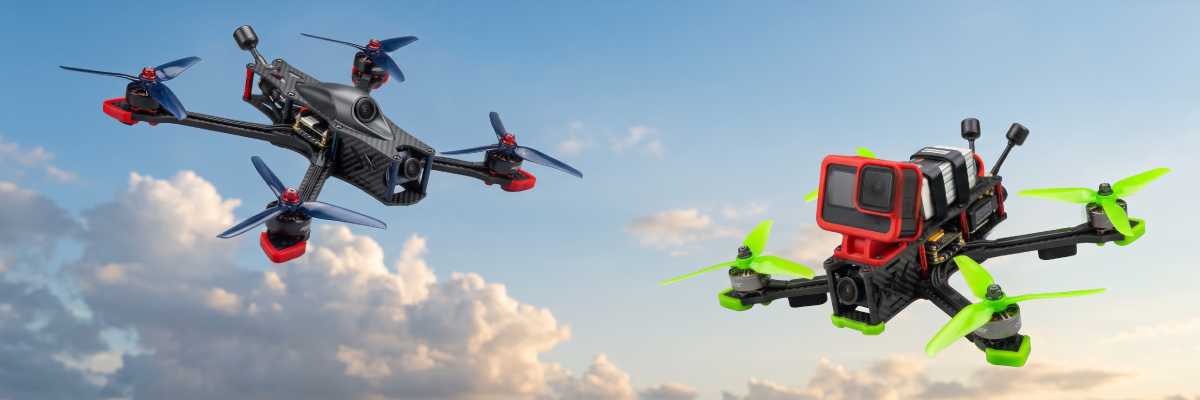
If you're new to FPV, you've probably come across the terms freestyle vs racing FPV drone and wondered whether they describe the same machine. At first glance, they often look nearly identical. Under the frame, however, they are built with very different priorities. One is tuned for speed and clean racing lines, while the other is designed for smooth control and creative flying. Choosing the wrong type can make learning harder than it needs to be. This guide explains the real differences so you can decide what FPV drone I should buy based on how and where you plan to fly.
What Is a Racing FPV Drone?
An FPV racing drone is built for one goal: completing a course as quickly and accurately as possible. Every part of the drone frame is chosen to reduce weight and improve control at high speed. Most racing builds use a rigid stretched X frame or true X frame in 3-inch to 5-inch sizes. They are paired with high motor KV values, usually around 2400–2800KV on a 6S LiPo battery, allowing the brushless motor to deliver exceptional top speed.
The Betaflight tune is intentionally sharp. Small stick movements produce immediate reactions, helping pilots hold tight lines through racing gates. Competitive quads regularly reach 150–200 km/h, although this comes at the cost of just 2–4 minutes of flight time. Most race builds carry only an FPV camera, keeping the overall weight as low as possible for events such as MultiGP competitions.
What Is a Freestyle FPV Drone?
An FPV freestyle drone is designed around freedom rather than lap times. Instead of chasing maximum speed, it gives the pilot confidence to perform rolls, flips, dives, split-S maneuvers, and long flowing lines. A typical build uses a durable 5-inch or 6-inch carbon fiber frame with thick arms that can survive repeated drone crash incidents.
These drones usually run lower KV rating motors, around 1900–2100KV on 6S. The extra torque provides smoother throttle response, making delicate corrections easier during technical tricks. Rather than an aggressive race tune, Betaflight settings focus on smooth handling and controlling prop wash. Most freestyle quads stay in the air for 4–6 minutes and often carry an action camera such as a GoPro or DJI O3 to capture high-quality footage while flying in open fields, drone park areas, or other popular freestyle locations.
Racing vs Freestyle FPV Drone — Side-by-Side Comparison
Although they share many of the same core components, the freestyle drone vs racing drone debate comes down to how each quad is built to fly. One focuses on speed and precision, while the other is designed for control, creativity, and durability.
|
Feature |
Racing Drone |
Freestyle Drone |
|
Primary goal |
Speed and lap times |
Tricks, creativity, video |
|
Frame shape |
Stretched X / True X |
True X / hybrid |
|
Frame size |
3"–5" |
5"–6" |
|
Motor KV (6S) |
2400–2800KV |
1900–2100KV |
|
Tune character |
Snappy, locked-in |
Smooth, responsive |
|
Top speed |
150–200+ km/h |
Lower priority |
|
Flight time |
2–4 minutes |
4–6 minutes |
|
Action camera |
Usually none |
Often included |
|
Typical location |
Racing track, gates |
Open fields, parks, urban |
|
Crash durability |
Moderate |
Higher priority |
Many pilots eventually enjoy both disciplines because each develops different flying skills. For a first quad, however, choosing one direction makes learning much more straightforward. A focused setup lets you build confidence before experimenting with other styles.
Frame Design: How Racing and Freestyle Frames Differ
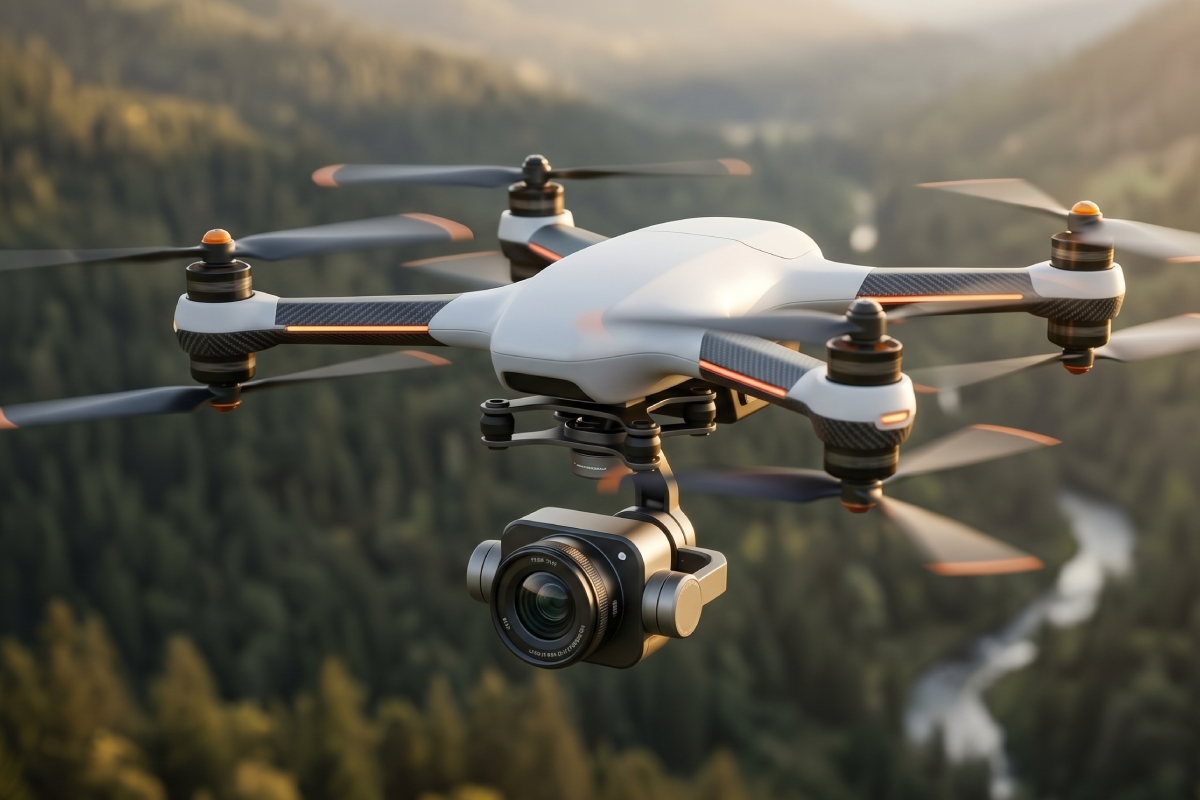
The racing drone vs freestyle drone difference starts with the frame. Racing builds use a lightweight, rigid frame with thinner arms to reduce drag and improve acceleration. A stretched X frame shifts the rear motors farther back, helping the quad stay stable at high speed and making forward flight more efficient.
A FPV freestyle drone takes the opposite approach. Most use a durable carbon fiber frame with greater arm thickness to handle repeated crashes. The popular true X frame keeps every motor the same distance from the center, giving balanced handling during flips, rolls, and quick direction changes. Frame weight also matters. A heavier but stronger build usually survives impacts that would damage a lighter race quad.
Motor and Power System Differences
Motor choice shapes how an FPV drone feels in the air. A higher KV rating delivers rapid acceleration and greater drone speed, making it the preferred option for racing. These builds usually combine high-KV brushless motor setups with smaller, stiffer propeller designs for fast spin-up and explosive punch-out performance.
Freestyle quads favor lower KV motors because they produce stronger torque and smoother throttle control during technical maneuvers. Both styles commonly use 4S or 6S LiPo battery packs, but the ESC, flight controller, and overall power system must be matched to the motor characteristics. A balanced setup delivers predictable handling, whether you're building one of your own FPV drones or upgrading it later with compatible drone accessories.
Tuning and Flight Feel: What Beginners Should Know
The biggest difference between the two styles becomes obvious the moment you lift off. A racing drone reacts instantly to every stick movement. That sharp response is perfect for hitting gates at speed, but it can feel overwhelming during early practice sessions. Freestyle builds are usually calmer and easier to read in the air, giving you a little more time to correct mistakes without taking away the ability to perform aggressive moves.
That difference comes from Betaflight tuning. Rates and PID values are set with different goals in mind. As your skills improve, you can retune the same quad for another style, but beginners often progress faster with a softer freestyle setup.
Which FPV Drone Style Is Right for You?
There is no universal answer because the best choice depends on how you plan to fly.
- You want to race and compete → Choose a racing drone with a lightweight build and precise tuning.
- You enjoy tricks, dives, and cinematic lines → A freestyle drone offers better durability and supports an action camera.
- You're completely new to FPV → A freestyle-oriented build or RTF kit is usually the easiest place to start.
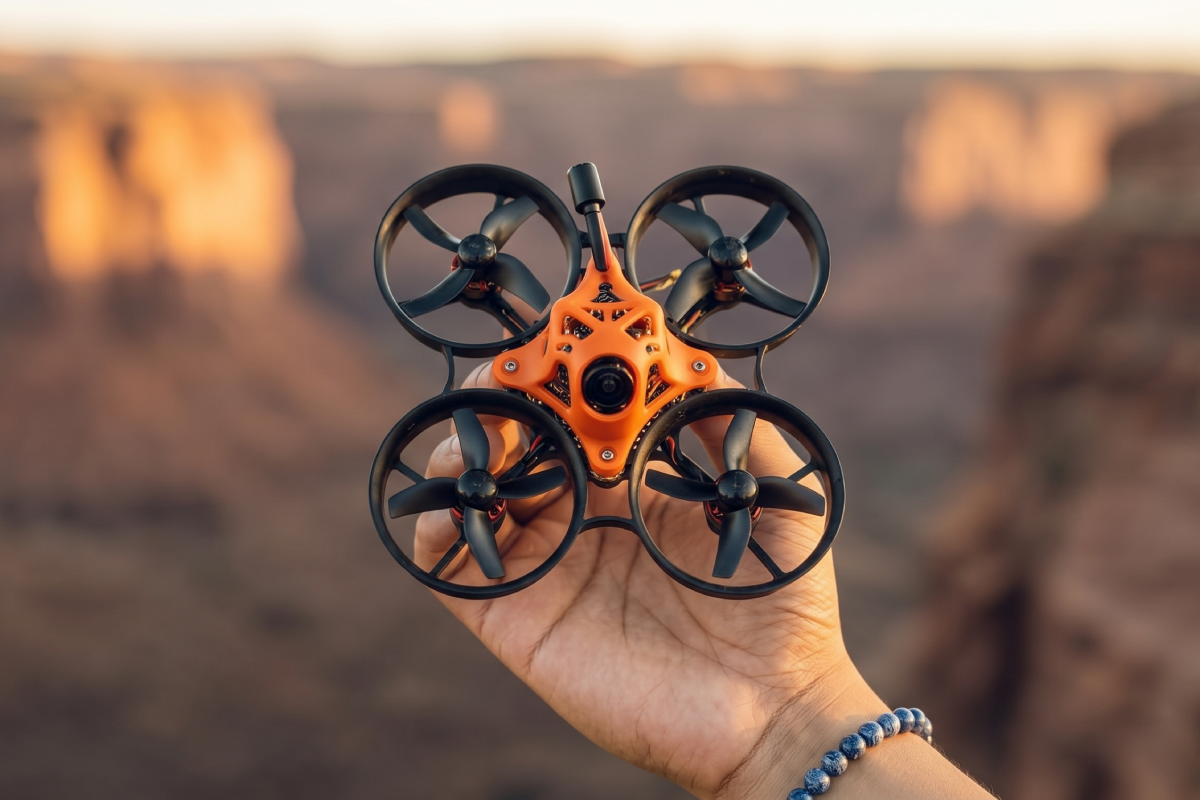
- You want to capture aerial video → A freestyle drone or cinewhoop, is a much better fit than a racing model.
- You have access to a racing club or permanent track → A dedicated racing setup makes sense if you expect to fly there regularly.
Before buying, think about where you'll spend most of your time flying. An open field, an abandoned industrial spot, and a race course all demand different characteristics. If you're still comparing available FPV drones, choosing a model that matches your local flying environment will make the learning process much more enjoyable.
Can One Drone Do Both Racing and Freestyle?
A single drone can handle both styles, but it will always perform better in the role it was designed for. Many modern 5-inch builds are versatile enough to fly around a race course one day and practice freestyle the next. Even so, there are clear compromises.
A freestyle quad can complete race laps, but its smoother tune and lower-KV motors usually leave it behind a dedicated racing machine. On the other hand, a racing drone is capable of flips and dives, yet its aggressive tuning makes smooth, flowing lines much harder to maintain. As pilots gain experience, many eventually keep two separate builds because each is optimized for a different type of flying. If you're buying or building your first FPV drone, it's usually better to choose one style and learn it well before trying to cover both.
Frequently Asked Questions (FAQ)
What is the difference between a freestyle and a racing FPV drone?
The main difference is the intended flying style. Racing drones are built for speed, quick acceleration, and accurate lines through gates. Freestyle drones focus on controlled, acrobatic flying and often carry an action camera. They also differ in frame design, motor KV, and Betaflight tuning.
Which FPV drone is better for beginners — racing or freestyle?
For most new pilots, a freestyle setup is the easier starting point. It has a more forgiving feel in the air, a stronger frame, and doesn't require access to a dedicated racing track. Many beginners also choose ready-to-fly freestyle kits to simplify the learning process.
How fast do racing FPV drones go?
Competitive racing builds commonly reach 150–200 km/h, and some exceed that under ideal conditions. Actual speed depends on the motors, propellers, battery, and overall tune.
Can a freestyle drone carry a GoPro or action camera?
Yes. Most 5-inch freestyle frames are designed to support cameras such as a GoPro or DJI O3. Carrying extra weight slightly reduces flight time, but recording high-quality footage is one of the main reasons pilots choose freestyle.
What frame size is best for freestyle FPV?
A 5-inch frame is the most popular choice for freestyle because it balances power, agility, and durability. Some pilots choose a 6-inch frame for smoother flight and better efficiency on longer routes.
Do I need a racing track to fly a racing drone?
Not necessarily, but that's where it performs best. Racing drones are tuned for fast gate-to-gate flying, while freestyle drones are generally more enjoyable in open spaces. If you spend a lot of time performing quick reversals and tricks, paying attention to prop wash tuning in Betaflight will also improve the overall flight experience.
What is prop wash and does it affect freestyle or racing more?
Prop wash is turbulent air created by the propellers. It affects freestyle more because tricks involve frequent direction changes. Proper Betaflight tuning helps reduce prop wash and keeps the drone smoother during maneuvers.